
Blood Flow Restriction Therapy in Los Angeles
Build Strength, Support Rehab, and Recover Without Overloading Injured Joints
At Performance Care Sports Medicine, we provide blood flow restriction therapy in Los Angeles for patients who need to rebuild strength, recover from injury, or improve function without placing excessive stress on painful or healing areas.
- Strength Building With Lighter Loads
- Injury Rehab Support
- Personalized Recovery Planning



Clear Diagnosis. Coordinated Care. Real Recovery.
Are Pain, Weakness, or Injury Keeping You From Rebuilding Strength?
One of the hardest parts of recovering from an injury is knowing you need to get stronger, but not being able to tolerate heavy exercise yet. Maybe your knee, hip, shoulder, ankle, or arm still hurts. Maybe you are recovering from surgery. Maybe your body feels weaker after weeks or months of avoiding painful movement.
Traditional strength training usually requires a certain amount of load to challenge the muscles. But when someone is injured, in pain, or recovering from surgery, heavy loading may not be realistic right away. That can create a frustrating gap in recovery: the body needs strength, but the injured area may not be ready for heavy resistance.
Blood flow restriction therapy was created to help bridge that gap.
You may be dealing with problems like:
- Muscle weakness after an injury that makes daily movement feel harder than it should.
- Pain that limits heavier exercise, even though you know strength is part of recovery.
- Joint sensitivity that makes traditional strength training uncomfortable.
- Post-surgical weakness after procedures involving the knee, hip, shoulder, ankle, or other areas.
- Difficulty rebuilding muscle because normal loading feels too intense.
- Fear of re-injury when trying to return to lifting, training, walking, running, or sports.
- Loss of confidence in the injured limb because it feels unstable, weak, or unreliable.
- Slow rehab progress after doing basic exercises but not feeling strong enough yet.
- Overuse injuries that make it difficult to strengthen the area without flaring symptoms.
- Athletic setbacks where you need to maintain or rebuild strength while protecting the injured area.
- Frustration from feeling stuck between rest and full activity.
- Concern about losing muscle mass while you recover.
Blood Flow Restriction Therapy Helps Patients Strengthen With Lighter Loads
We Use Guided BFR Training to Support Rehab, Muscle Activation, and Functional Recovery
Blood Flow Restriction Therapy Helps Patients Strengthen With Lighter Loads
We Use Guided BFR Training to Support Rehab, Muscle Activation, and Functional Recovery
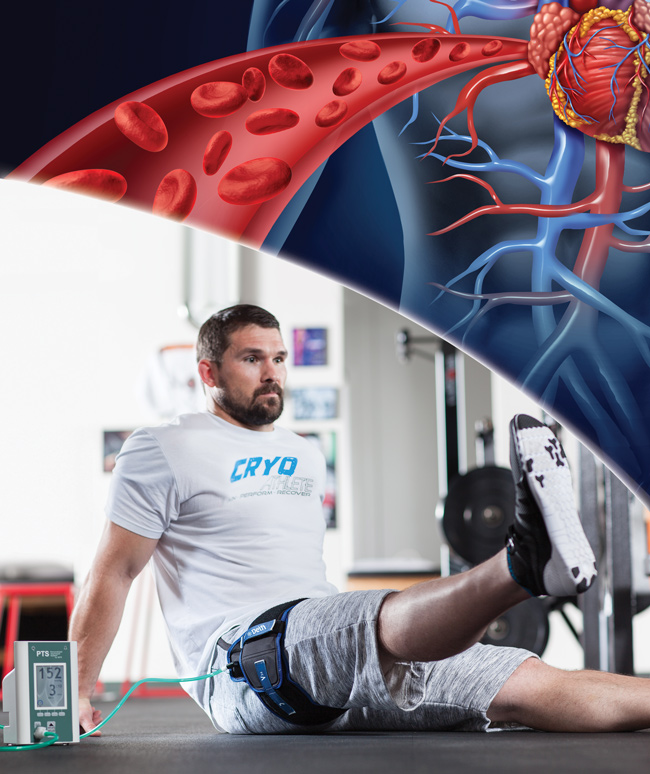
Blood flow restriction therapy, often called BFR, is a rehab technique that uses a specialized cuff system placed around an arm or leg while the patient performs specific exercises. The goal is to temporarily and safely limit blood flow to the working muscles during low-load exercise, helping create a stronger training response without requiring heavy weights.
This matters because many patients cannot safely or comfortably lift heavy weights during rehab. BFR may allow the muscles to work harder while the joint or injured tissue is exposed to lighter resistance. In other words, we can often challenge the muscles without overloading the area that is still recovering.
BFR can be especially useful when the body needs a strength-building stimulus, but heavier training is not yet appropriate. That may include post-surgical rehab, knee or hip recovery, shoulder injuries, tendon issues, sports injuries, or general muscle weakness after a period of pain or inactivity.
Our focus is always the same: clear diagnosis, coordinated care, and measurable progress.

Benefits of Blood Flow Restriction Therapy at Performance Care Sports Medicine
A Smarter Way to Support Strength and Rehab Without Heavy Loading
Benefits of Blood Flow Restriction Therapy at Performance Care Sports Medicine
A Smarter Way to Support Strength and Rehab Without Heavy Loading
Benefits of Blood Flow Restriction Therapy at Performance Care Sports Medicine
A Smarter Way to Support Strength and Rehab Without Heavy Loading
When people search for blood flow restriction therapy in Los Angeles, they are often looking for a way to rebuild strength while managing pain, protecting an injury, or recovering from surgery. BFR may be a helpful tool because it allows us to create a meaningful muscle challenge with lighter loads.
Helps Build Strength With Lighter Resistance
One of the main benefits of BFR is that it may help patients strengthen muscles without using heavy weights. This can be helpful when an injury, surgery, joint pain, or weakness makes traditional resistance training difficult.
Supports Injury Rehabilitation
Performance Care’s existing blood flow restriction page explains that BFR is used to rehabilitate muscle injuries, especially those affecting an arm or leg. It also notes that professional sports teams have used BFR to help athletes recover from injuries.
Useful When Heavy Loading Is Not Appropriate
Some patients are not ready for heavy lifting, but they still need to challenge the muscles. BFR may allow us to create a strength-building effect with lighter loads, which can be especially helpful during certain phases of rehab.
Can Be Incorporated Into Physical Therapy
Blood flow restriction therapy can be added to a traditional rehab session when appropriate. The current Performance Care page describes BFR as something that can be incorporated into traditional physical therapy, similar to other techniques or equipment.
Helps Address Muscle Weakness and Deconditioning
Pain and injury often lead to reduced activity. Over time, that can cause weakness, muscle loss, and reduced confidence. BFR may help patients begin rebuilding strength while still respecting the limitations of the injured area.
Personalized and Monitored Care
At Performance Care Sports Medicine, BFR is guided and monitored as part of a larger recovery plan. We consider your comfort, goals, injury stage, and response to treatment so your rehab stays focused, safe, and productive.
How Our Blood Flow Restriction Therapy Process Works

Step 1: Comprehensive Evaluation
We begin with a detailed evaluation to understand your injury, pain level, strength, mobility, medical history, activity level, and recovery goals. This helps us determine whether blood flow restriction therapy may be appropriate for your situation.
Step 2: Personalized BFR Setup and Exercise Plan
If BFR is a good fit, we place a specialized cuff around the appropriate arm or leg and guide you through controlled exercises. The goal is to challenge the muscles using lighter resistance while reducing the need for heavy loading on the injured or sensitive area.

Step 3: Progress Strength and Function Over Time
As your body adapts, we monitor your progress and adjust your plan. Your care may also include physical therapy, mobility work, strengthening, soft tissue treatment, chiropractic care, or other supportive therapies depending on your needs.
Everything We Do Is Built for Real Recovery
Personalized BFR Programs
Blood flow restriction therapy should not be done randomly. We personalize your program based on your injury, goals, tolerance, and stage of recovery so the treatment fits your body.
Guided and Monitored Treatment
BFR involves temporary blood flow restriction, so it should be performed with proper equipment and guidance. Our team monitors the process and adjusts the plan based on your comfort and response.
Strength Training With Less Joint Stress
Because BFR can be performed with lighter loads, it may help patients strengthen muscles while reducing stress on irritated joints, healing tissues, or painful areas.
Helpful for Arm and Leg Injuries
Performance Care’s current BFR page explains that blood flow restriction rehabilitation is commonly used for muscle injuries, particularly those occurring in an arm or leg. Their page also lists knee and hip replacements, ACL injuries, rotator cuff injuries, and Achilles tendon injuries as examples of cases where BFR may be used.
Integrated With a Larger Rehab Plan
Because Performance Care Sports Medicine offers chiropractic care, rehab, medical support, soft tissue treatment, and advanced therapies under one roof, BFR can be part of a coordinated recovery plan instead of an isolated treatment. Their homepage emphasizes coordinated care, measurable progress, and recovery built around a clear diagnosis.
Progress-Based Care
We track how your strength, pain, mobility, stability, and confidence improve over time. As you progress, your exercises and treatment plan can progress with you.
Frequently Asked Questions About Blood Flow Restriction Therapy in Los Angeles
What is blood flow restriction therapy?
Blood flow restriction therapy, or BFR, is a rehab technique that uses a specialized cuff placed around an arm or leg while the patient performs specific exercises. The goal is to temporarily reduce blood flow during low-load exercise to help stimulate muscle activation and strength-building.
How does blood flow restriction therapy work?
BFR works by limiting blood flow to the muscles during controlled exercise. Performance Care’s current page explains that this process, called occlusion, allows the patient to work the muscles without placing excessive weight on the limb.
What is blood flow restriction therapy used for?
BFR may be used to support rehab for muscle injuries, post-surgical weakness, joint pain, sports injuries, and conditions where heavier strengthening is not appropriate. It may be especially helpful for certain arm or leg injuries.
Do you provide blood flow restriction therapy in Los Angeles?
Yes. Performance Care Sports Medicine provides blood flow restriction therapy in Los Angeles as part of a guided rehab and recovery plan for patients who need to rebuild strength without overloading painful or healing areas.
Is blood flow restriction therapy safe?
BFR should be performed by trained professionals using appropriate equipment and screening. Performance Care’s existing BFR page describes the treatment as using an FDA-approved surgical tourniquet system and notes that it is used as part of supervised rehabilitation.
Does blood flow restriction therapy hurt?
BFR can feel unusual or challenging because the cuff creates pressure while you exercise. However, it should be tolerable and controlled. We monitor your comfort and adjust the treatment as needed.
Can BFR help after surgery?
BFR may be helpful for certain post-surgical rehab cases, especially when rebuilding strength is important but heavier loading is not yet appropriate. Performance Care’s current page lists knee and hip replacements as examples of cases where BFR may be used.
Can athletes benefit from blood flow restriction therapy?
Yes. Athletes may benefit from BFR when recovering from injury, rebuilding strength, or maintaining muscle activation while protecting a painful or healing area. Performance Care’s current page notes that professional sports teams have used BFR to help athletes recover from injuries.
Is BFR a replacement for physical therapy?
No. BFR is usually one tool within a broader rehab plan. It may be combined with physical therapy, mobility work, strengthening, chiropractic care, soft tissue treatment, or other therapies depending on your condition.
Is blood flow restriction therapy right for me?
BFR may be a good fit if you need to rebuild strength but cannot tolerate heavy loading because of pain, injury, surgery, or joint sensitivity. The best way to know is to schedule an evaluation so we can review your condition and determine whether BFR belongs in your recovery plan.